"We had a clear night. Great views, interesting commentary, assistance with telescopes and great views through those. Dress up warm. coats provided give extra warmth. Red lights on bus ensured we could see as soon as we arrived.."
CHECK FIRST
Cloud decides the night
—
Summit cloud, 10 PM–2 AM
—
Moon lit tonight
—
Fully dark from
9am–4pm
Mt John road open, daily
Hourly forecast for the summit · Based on data from MET Norway · how the sky check works · checked in Tekapo
Illustration.
Mount John · Lake Tekapo / Takapō · Mackenzie Basin
Visiting Mount John Observatory: the road, the summit tour and tonight's sky
The University of Canterbury's observatory on the summit is a research station, not open to the public. The road up is a daytime road; after dark, Dark Sky Project takes its guests up by coach for a guided session with telescopes. Summit nights sell out, so start with the calendar.
From
US$131
per person
Free cancellation
Mount John Observatory, in brief
Can You Visit Mount John Observatory?
Mount John Observatory is the University of Canterbury’s astronomy field station on the summit above Lake Tekapo (Takapō), and the university’s own page says it “is not open to the public” (canterbury.ac.nz, read 20 November 2026). You can still get to the top. By day a private access road climbs Mount John from 9am to 4pm, with a fee of $14 per vehicle paid at the gate, according to Dark Sky Project’s pages (read 20 November 2026). After dark, Dark Sky Project runs a guided stargazing session at the observatory, from US$131 per person, and its FAQ says guests on its evening tours are “not permitted to drive up Mt John” in the evening: a coach takes them up from its base in the village.
That summit session has 359 reviews on GetYourGuide, averaging 4.6 out of 5, and it runs seven days a week but sells out: of 29 dates sampled between late November and mid-January on 20 November 2026, six still had places. So pick the night on its calendar before you plan around it. If your night is not there, Chameleon Stargazing's session by the Tekapo River, costs US$71 per person, holds a 4.9 average over 797 reviews and showed open sessions on all seven sample dates. It does not go up Mount John.
Dark Sky Project: Summit Stargazing at Mount John Observatory
Dark Sky Project's 105 minutes at the observatory: the coach up from its base, a guide, telescopes beside the domes and a heavy jacket. Ages 10 and over.
Open the summit calendar →Bookable every night we sampled
Lake Tekapo Stargazing by the Tekapo River (Chameleon Stargazing)
Chameleon Stargazing's dark site sits on the Tekapo River a short drive out of the village. Expect a 9.25-inch telescope, mattresses and blankets, hot chocolate and photos of you under the sky.
Check riverside dates →All prices: regular US-dollar rates per person for the option on each card; on the summit session two adults pay the same rate each as one.
- 4.6 / 5 359+ Reviews
- 105 minutes Duration
- 1965 Observatory opened (University of Canterbury)
- 10+ Ages on the summit session
- Free Cancellation
The Experience
In the Mount John Summit Session
Line by line: what the session includes at the top, and what stays out.
Dark Sky Project's own highlights, inclusions and notes, as listed on GetYourGuide in November 2026.
Highlights
- Stargazing with a guide on the summit of Mount John
- Telescope viewing, with an observatory dome on site
- Your guide's running commentary on the sky
- The ride from the Dark Sky Project base to the top and down again
What's Included
- A guided stargazing session at the top of Mount John, 1 hour 45 minutes there and back
- Time on the Mount John Observatory summit, 1,029 m up
- A guide who reads the sky and tells its stories
- The coach from the Dark Sky Project base up to the summit and down
- A heavy cold-weather jacket for the summit
Good to know: For ages 10 and over · Dress warmly in every season; heavy jackets are handed out when you check in · You must speak the language of the session you book (English, Chinese or Japanese), or you will not be allowed to join · Not suitable for: Children under 10 years, People with mobility impairments · Not Included: Food and drinks, Hotel pickup and drop-off
An Evening on Mount John, Step by Step
Check-in in the village, the coach up the private road, the session, the ride down.
Arrive at the village base
Dark Sky Project's base stands on Motuariki Lane (number 1) in the village, and the heavy jackets come out at check-in.
The coach up Mount John
Evening guests do not drive themselves: a coach climbs the private road to the summit, about 15 minutes each way.
Eyes first, telescopes second
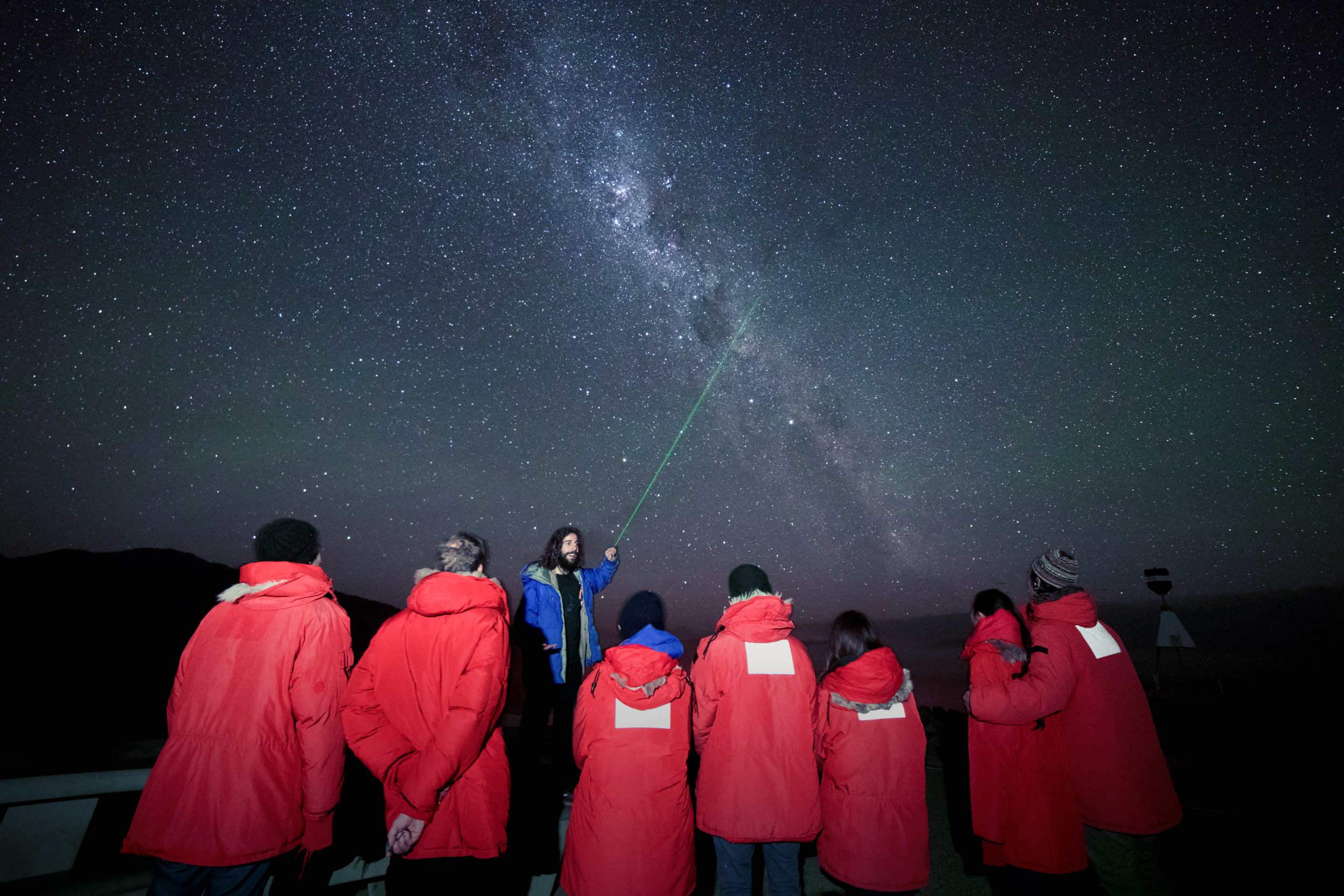
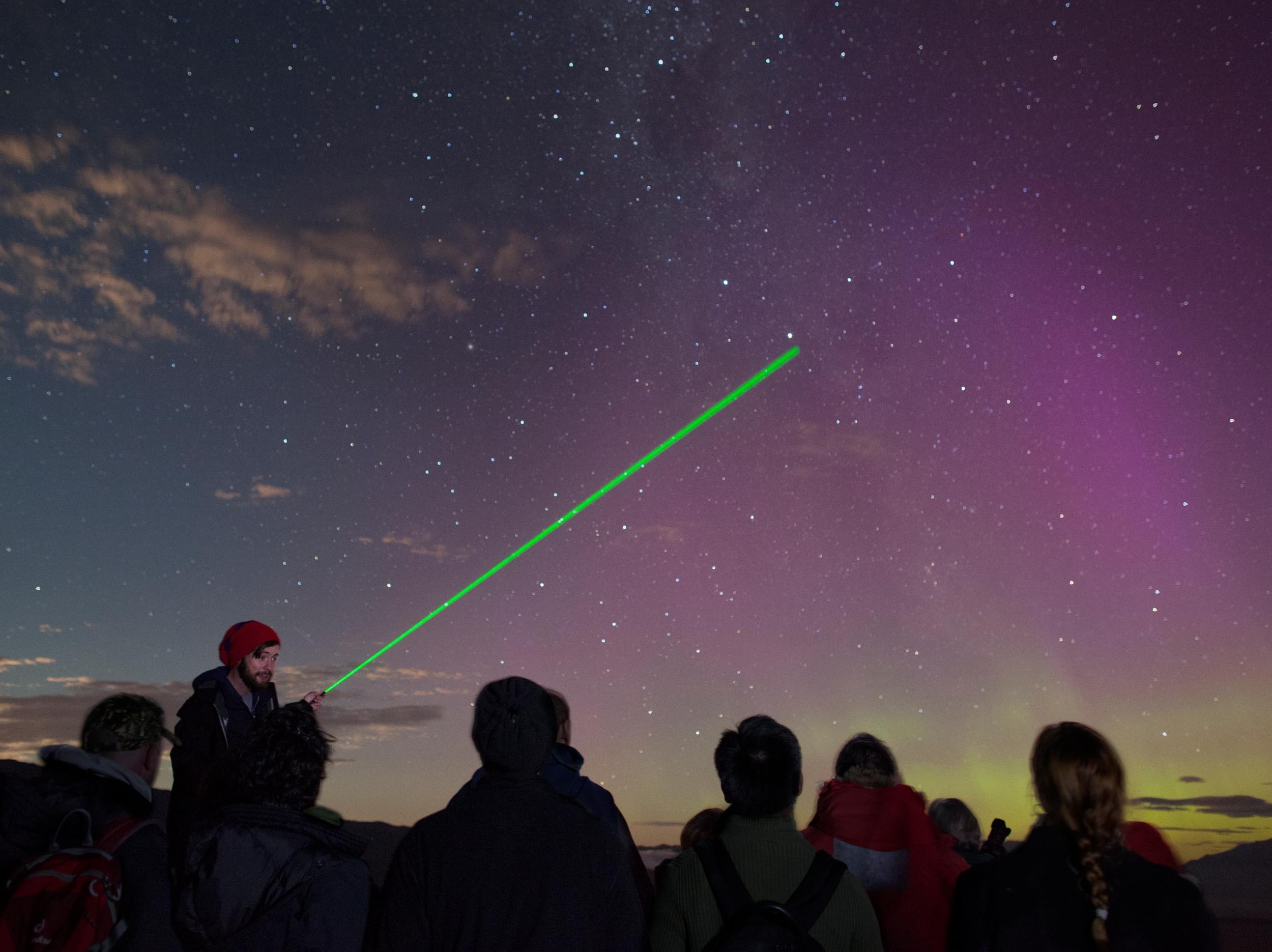
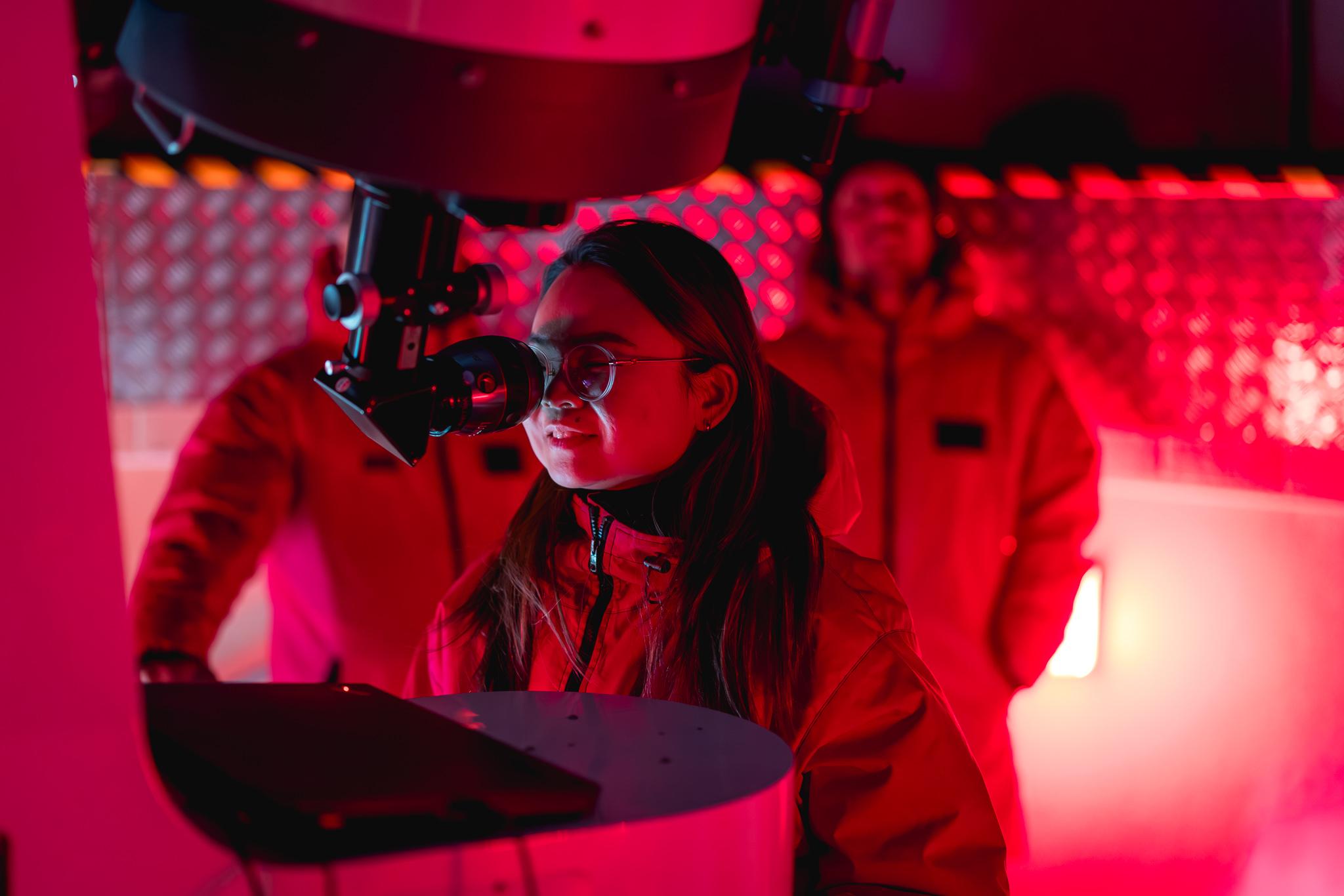
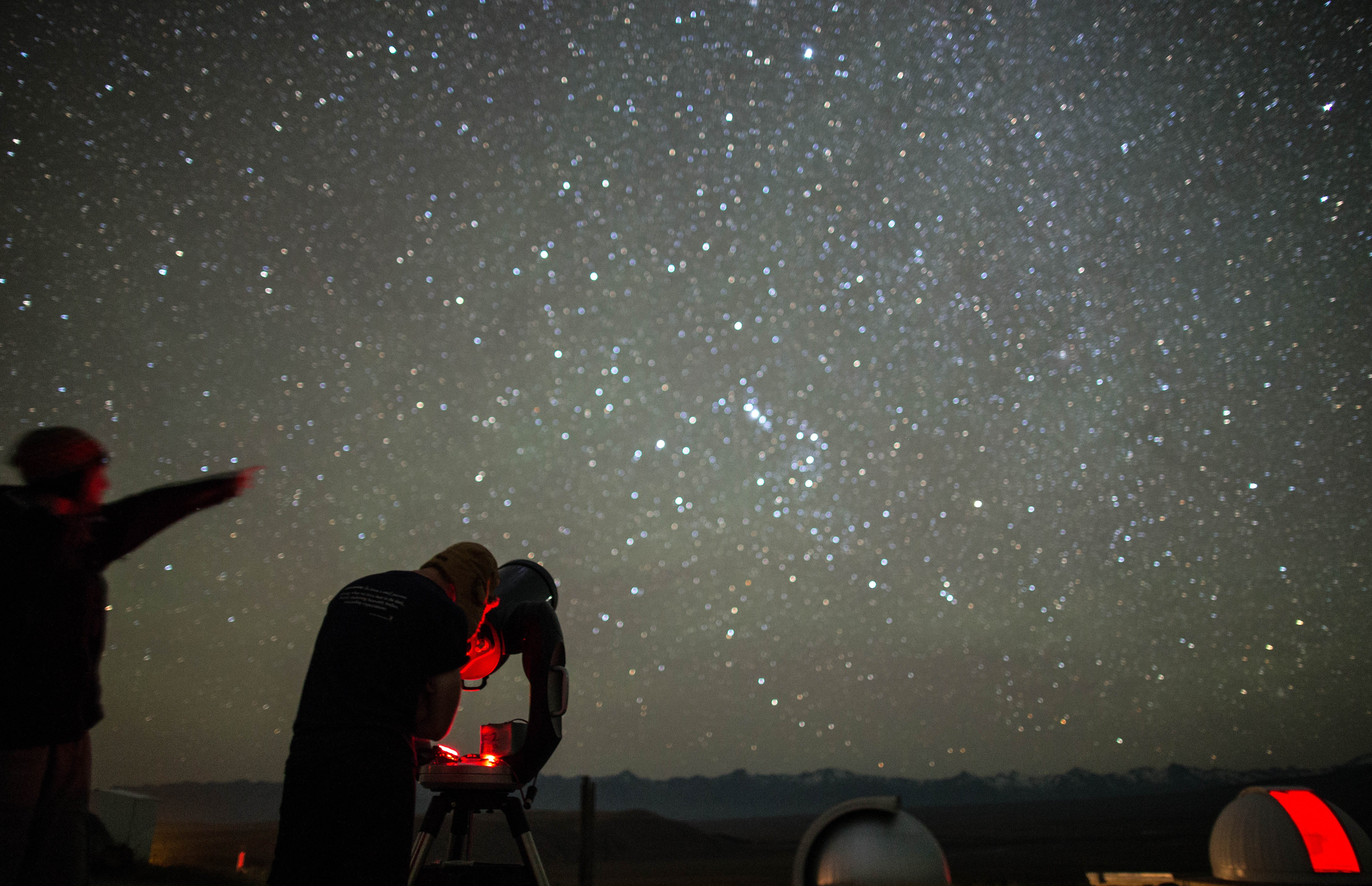
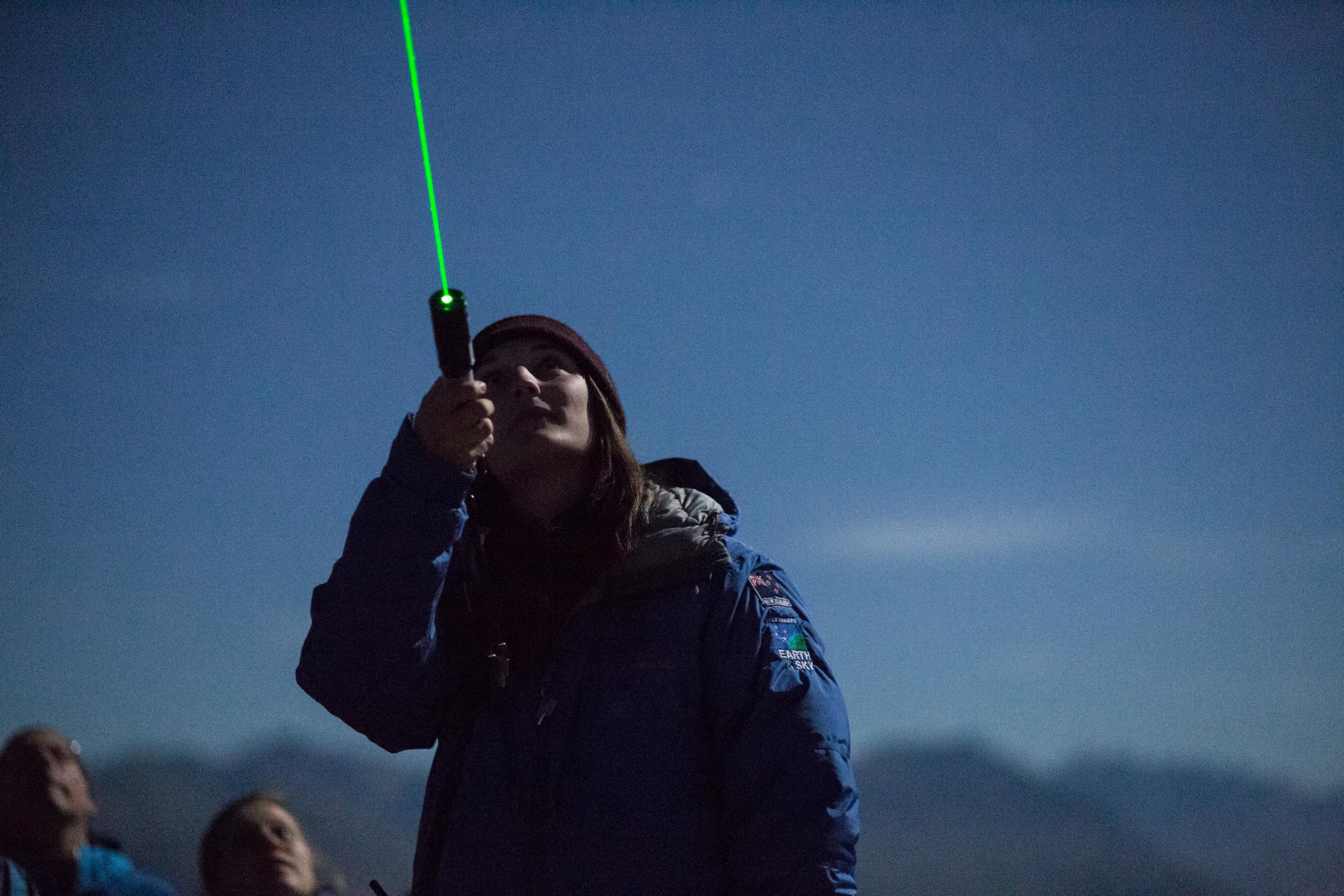
Beside the observatory domes the guide traces constellations and planets with a laser pointer, then the telescopes come into play.
Down to the village
From leaving the base to getting back takes about 1 hour 45 minutes, the coach both ways included.
Photo Gallery
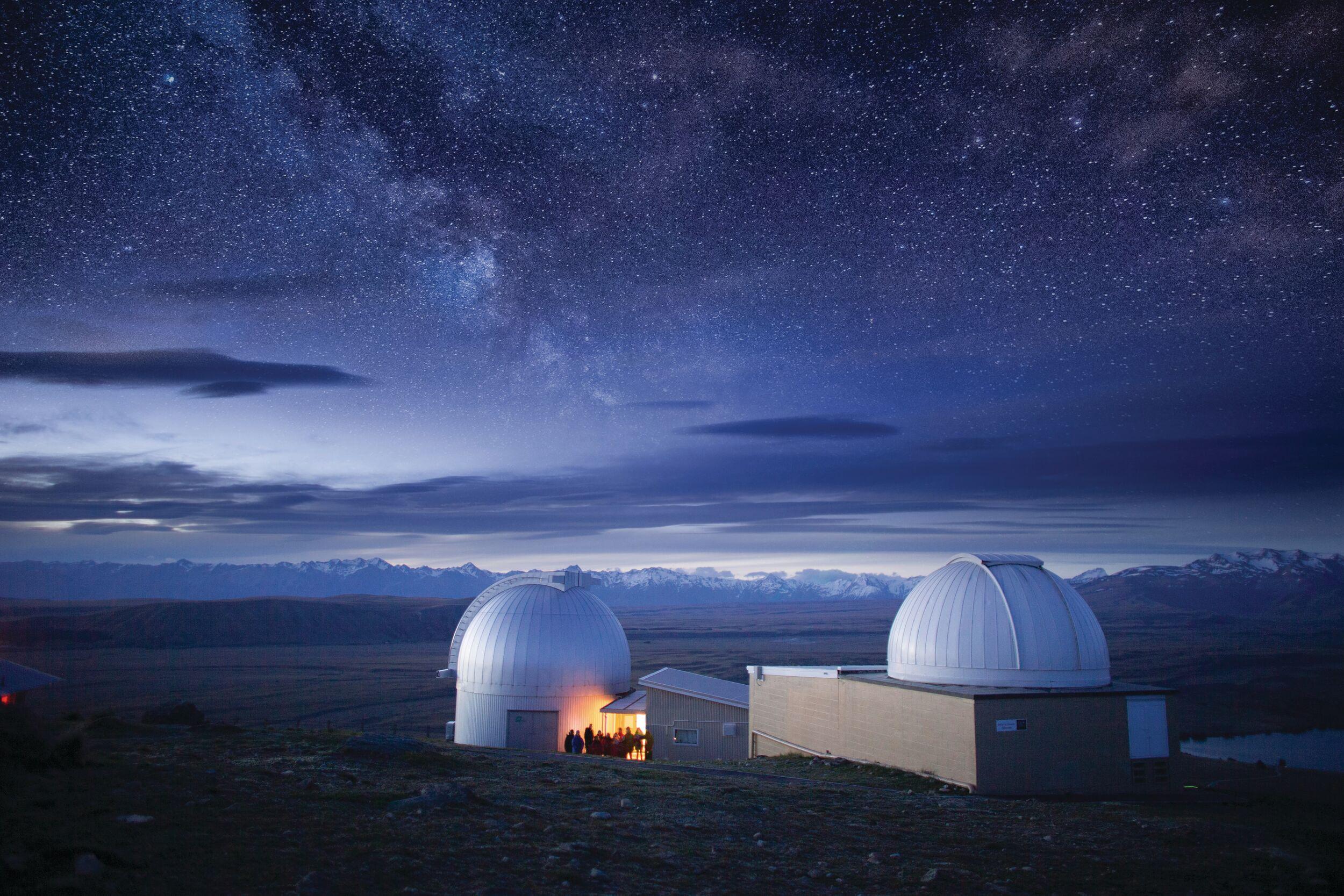
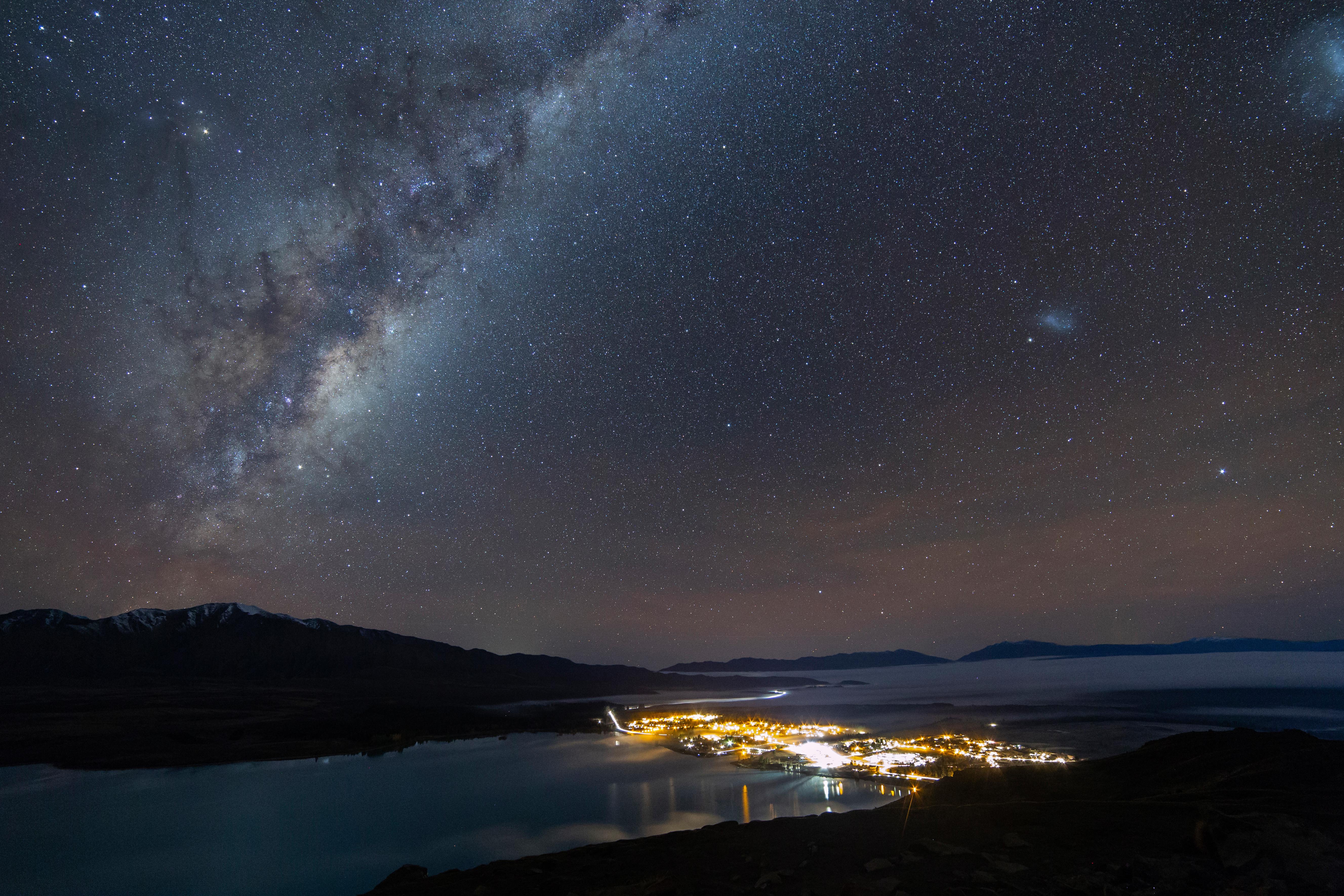
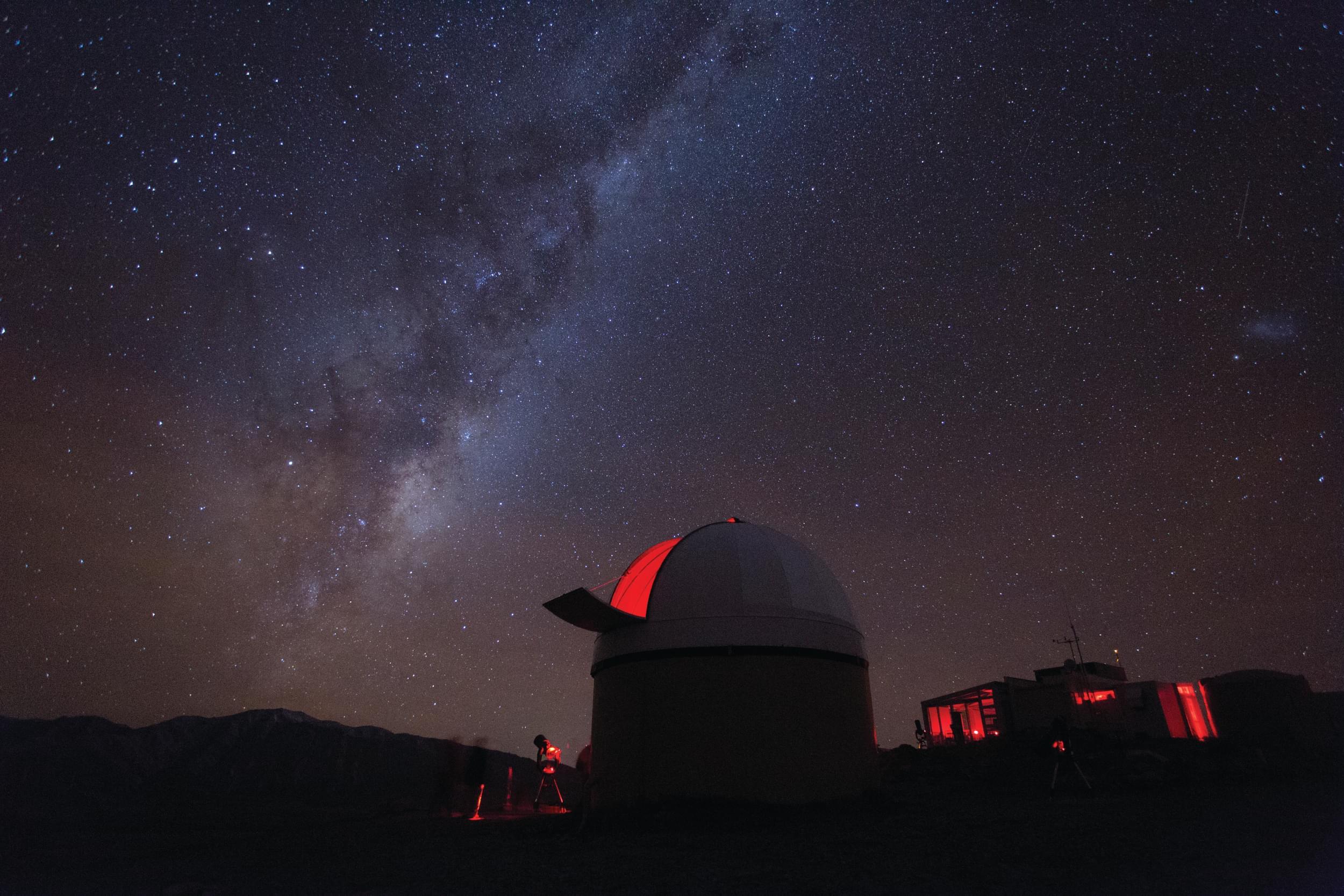
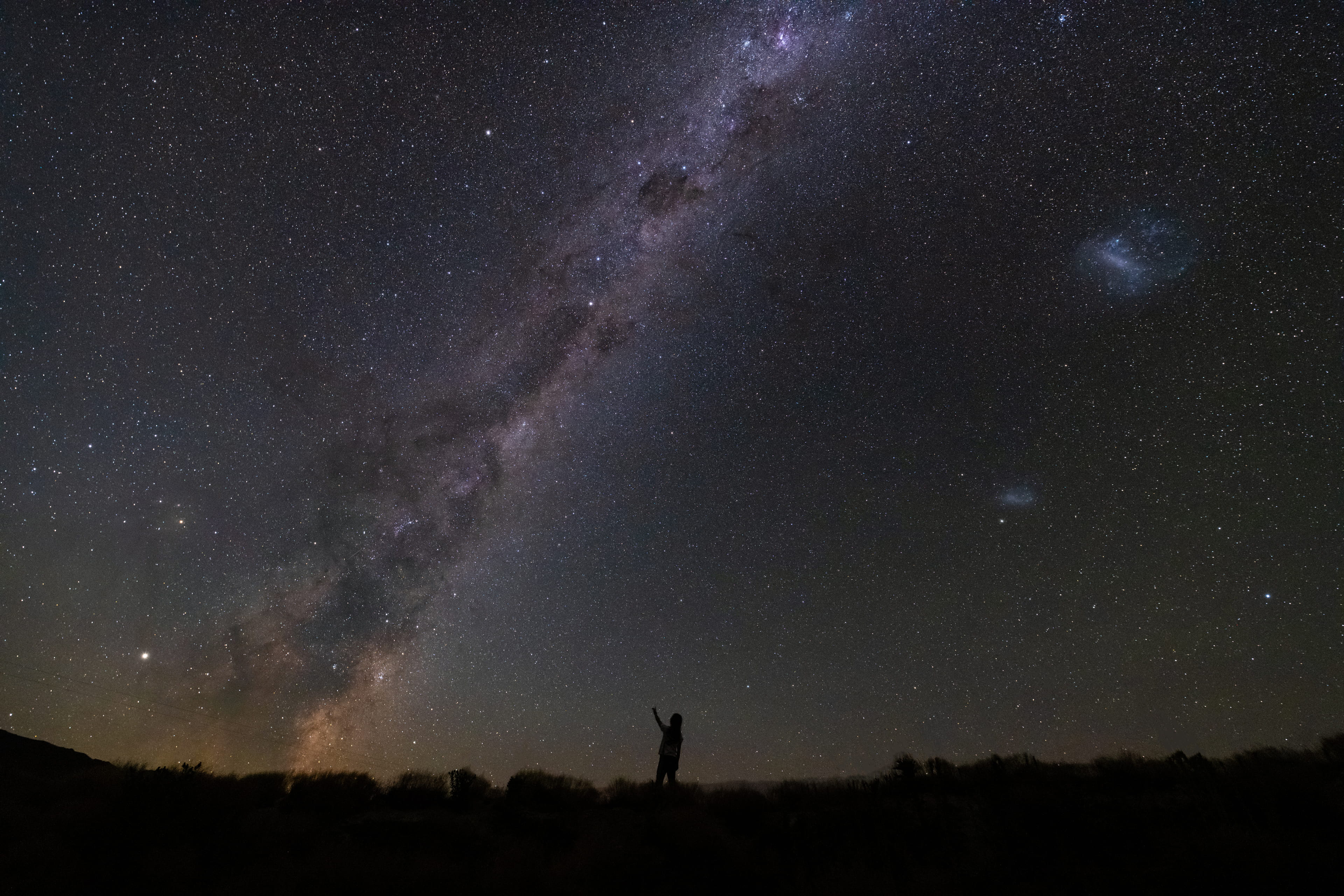
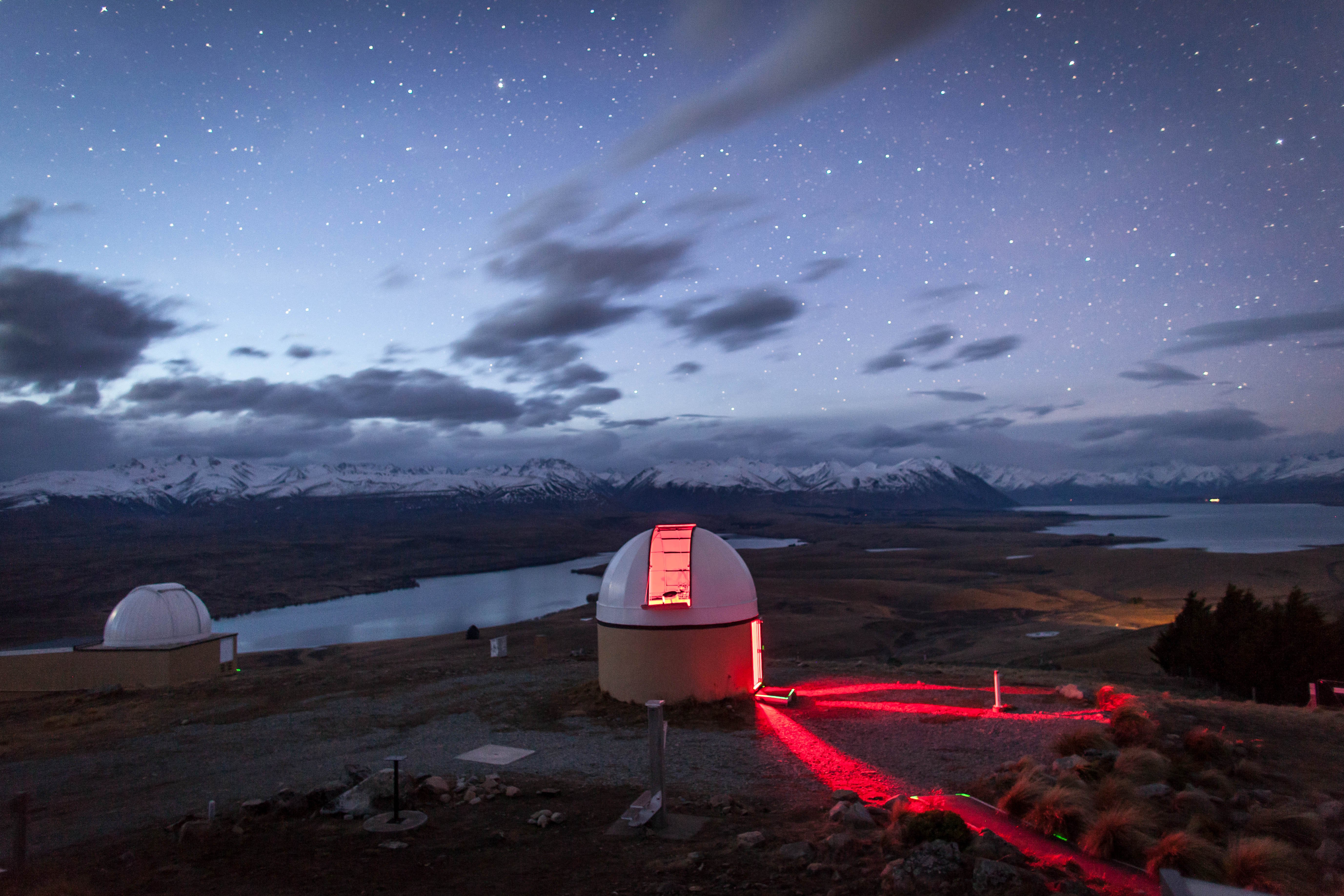
Mount John Observatory After Dark
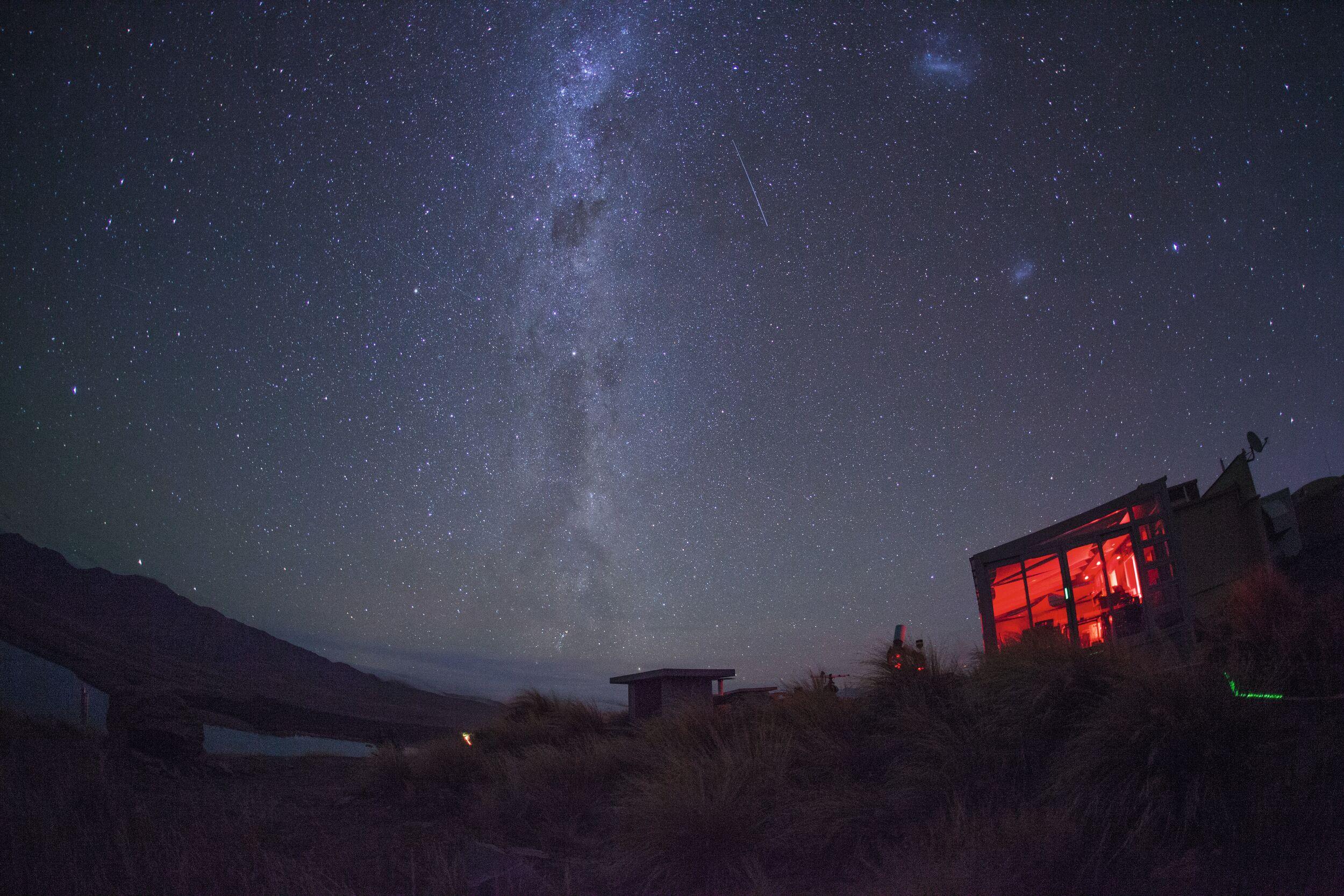
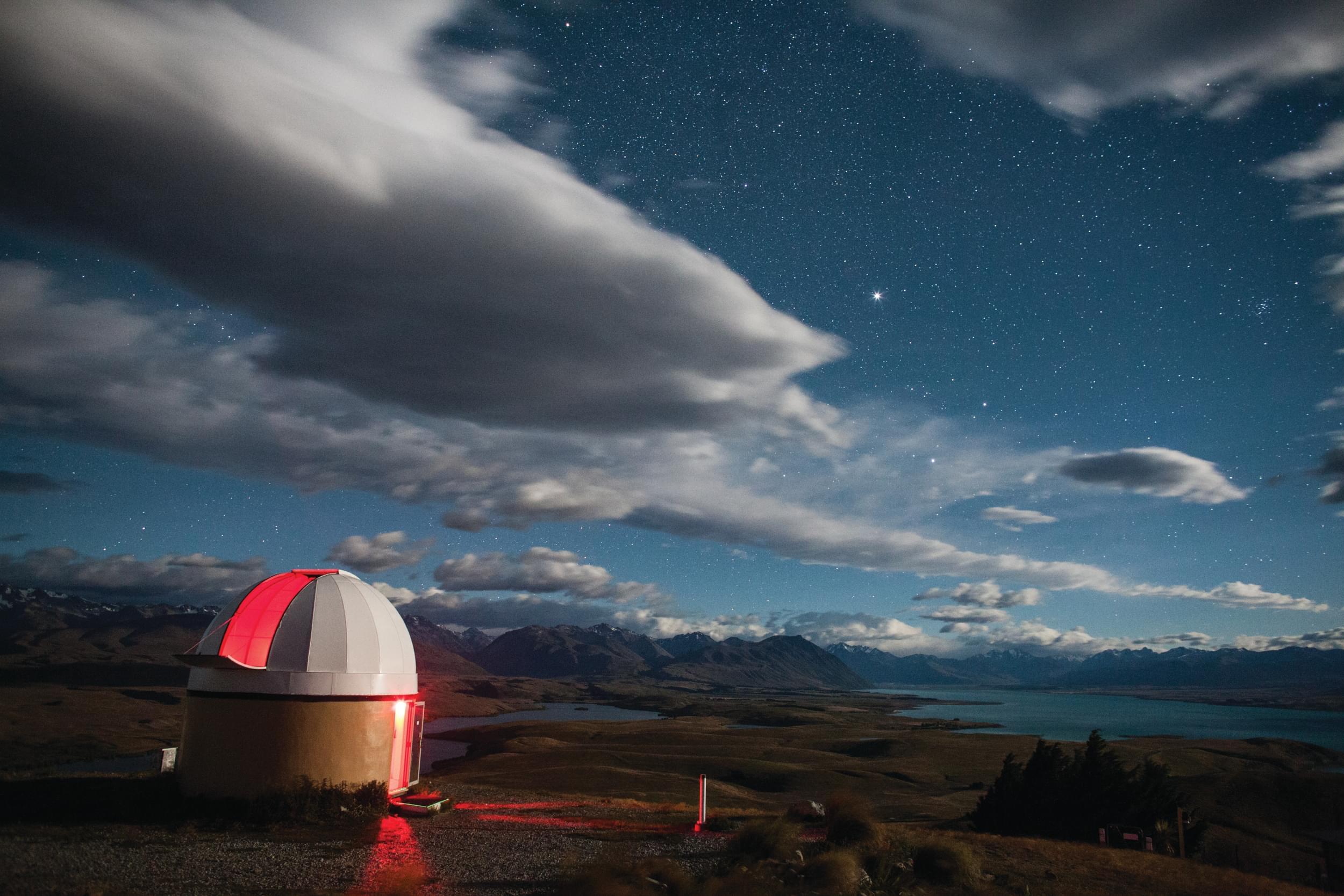
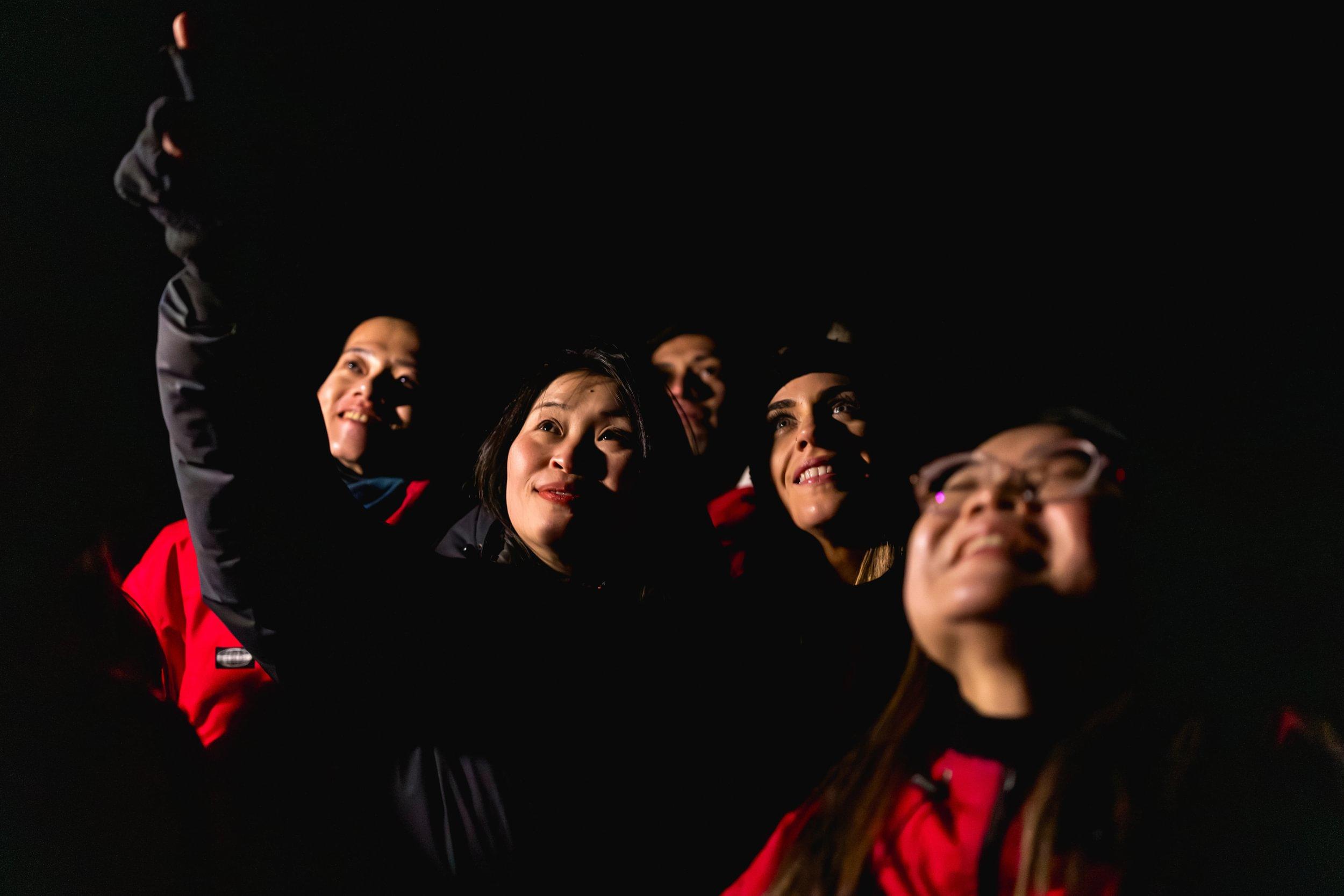
The summit, the domes and the telescopes.
Book Your Experience
Check Availability & Prices
Dark Sky Project's 105-minute evening at the observatory on the summit: check-in at its base in Lake Tekapo village, the coach up and down, an astronomy guide, telescopes and a heavy cold-weather jacket, but no food, drinks or hotel pickup. For ages 10 and over, with free cancellation up to 24 hours ahead.
Mount John Summit and the Other Lake Tekapo Sessions
Each price is that session's own, per person. Regular prices in US$.
| Feature | AT THE OBSERVATORY Mount John summit | By the Tekapo River | Cowan's craters | Indoor, at the base |
|---|---|---|---|---|
| Price | From US$131 per person | From US$71 per person | From US$76 per person | From US$32 per person |
| Operator | Dark Sky Project | Chameleon Stargazing | Dark Sky Project | Dark Sky Project |
| Length | 1 h 45 min, coach included | 1.5 hours | About 75 minutes | 45 minutes |
| Where you stand | Mount John summit, 1,029 m | Dark site beside the Tekapo River | Observation craters at Cowan's Private Observatory | Indoor astronomy centre in the village |
| Getting there | Coach from the base, 1 Motuariki Lane | About four minutes' drive from the village | Coach from the base, 1 Motuariki Lane | At the base, 1 Motuariki Lane |
| Ages | 10 and over | Not stated | 5 and over | All ages |
| Warmth and extras | Heavy cold-weather jacket | Blankets, mattresses, hot chocolate, fire bowl | Bring warm clothing, a hat and a scarf | Indoors |
| Not included | Food, drinks, hotel pickup | None listed | Food, drink, hotel pickup | Food, drinks, hotel pickup |
| Summit calendar | Riverside session dates | Crater session dates | Indoor session dates |
Where to Stay Near Mount John Observatory
The summit session checks in at Dark Sky Project's base in Lake Tekapo village, and the turn-off for the Mount John road is just south of it on State Highway 8, so the village is where most visitors sleep. Pick your dates on the map to see what is free around the lake and what it costs.
Mount John, Lake Tekapo / Takapō
A Guide to Visiting Mount John Observatory
What the observatory is, the daytime road and walk, the evening summit session, the other ways to see the Mackenzie sky, and how the cloud check works.
What Mount John Observatory is
The University of Canterbury describes Mt John Observatory as its premier astronomy field station: it stands above Lake Takapō in the Te Manahuna / Mackenzie Basin, it opened in 1965, and it sits within the Aoraki Mackenzie International Dark Sky Reserve. The same page calls it a university research facility that “is not open to the public”, though it takes part in a number of the university’s outreach events each year (canterbury.ac.nz, page dated 1 October 2026). The university gives its position as 43°59′12″S, 170°27′54″E, about 245 km south-west of its Ilam campus in Christchurch.
So when people search for a “Mount John Observatory tour”, what they can book is a stargazing session run on the summit by Dark Sky Project, which names the University of Canterbury Mount John Observatory as the place its Summit Experience takes place. The domes, the telescopes inside them and the research belong to the university.
Visiting Mount John by day: the road, the Astro Cafe and the walk
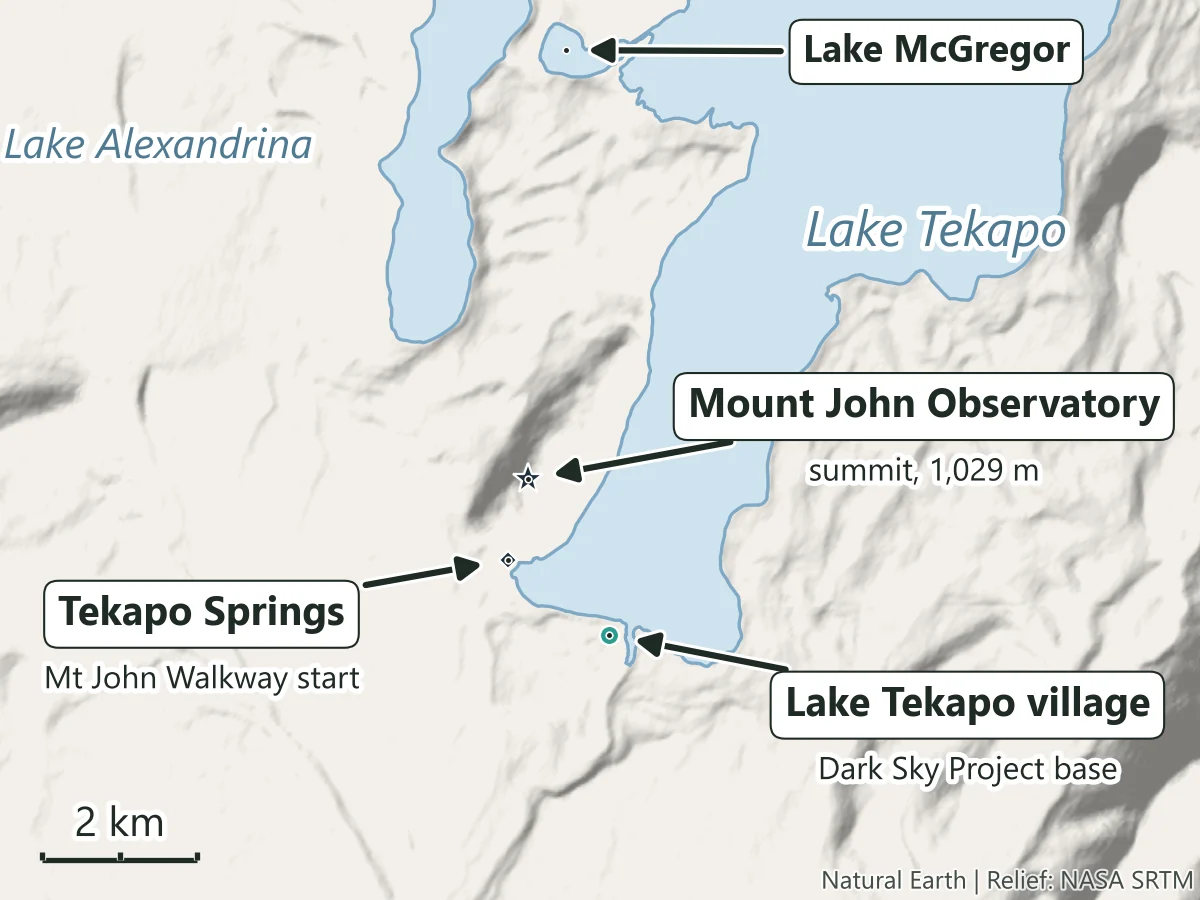
The road to the summit is a private access road, open 9am to 4pm every day, and Dark Sky Project’s pages put the fee at $14 per vehicle, paid at the gate by EFTPOS or card (read 20 November 2026). It leaves Godley Peaks Road off State Highway 8; Mackenzie NZ places the turn-off about 1 km south of Lake Tekapo, 10 to 15 minutes from the village. At the top is the Astro Cafe, run by Dark Sky Project; look up its opening hours on the operator’s page before you go.
On foot, the Department of Conservation describes the Tekapo Mt John Walkway as an 8.9 km loop of about 3 hours, graded an advanced tramping track, starting next to Tekapo Springs, with no dogs or mountain bikes. DOC’s shorter option is to drive to the top, park near the cafe and walk the Mt John Summit Circuit Track, 30 to 45 minutes. From the summit, Mackenzie NZ describes 360-degree alpine views over Lake Tekapo, Lake Alexandrina and Lake McGregor.
A daytime visit does not include the domes: the observatory itself stays closed to the public by day as well. For astronomy in daylight, Dark Sky Project's indoor Dark Sky Experience at its village base is US$32 per person for 45 minutes, with Māori and modern astronomy and the restored Brashear telescope.
At night: the Mount John summit session
Dark Sky Project's Summit Experience on Mount John begins at the operator’s village base on Motuariki Lane (number 1). The coach up the access road takes about 15 minutes, and the whole evening is 1 hour 45 minutes, the ride both ways included. Up among the observatory domes, a guide picks out the constellations and planets by laser before the telescopes take over. At the top there is a 100-metre walk on a gravel incline and a couple of steps in the dark, and the summit session is not wheelchair accessible.
It is US$131 per person, and two adults pay that same rate each. The price covers the coach from the base and back, the guide, the telescopes and a heavy cold-weather jacket for the summit; food, drinks and hotel pickup are left out. It is for ages 10 and over. On the December dates sampled on 20 November 2026, the calendar offered a single start, at 2:00 AM, so expect a late night and look at the time on your date before booking.
Other ways to see the Mackenzie sky
These sessions are sold for Lake Tekapo nights; only the summit session goes up Mount John.
- Chameleon Stargazing by the Tekapo River: US$71 per person, 1.5 hours, at a dark site about four minutes’ drive from the village. In the price: a 9.25-inch telescope, a smart telescope, an astronomy guide, edited photos, outdoor seats, pillows, mattresses and blankets, hot chocolate, marshmallows and a fire bowl. Sessions after midnight are listed under the next day’s date. 4.9 out of 5 from 797 reviews.
- Crater stargazing at Cowan's Observatory: US$76 per person, about 75 minutes, also run by Dark Sky Project, with the coach from its base. You watch from observation craters built for the purpose rather than from the summit. For ages 5 and over; food, drink and hotel pickup not included. 4.6 out of 5 from 93 reviews.
- The indoor Dark Sky Experience: US$32 per person, 45 minutes inside the astronomy centre at the base, open to all ages. It is indoors, with no outdoor stargazing, which makes it the daytime and cloudy-night option. 4.6 out of 5 from 54 reviews.
Tonight’s sky at Mount John: how the check works
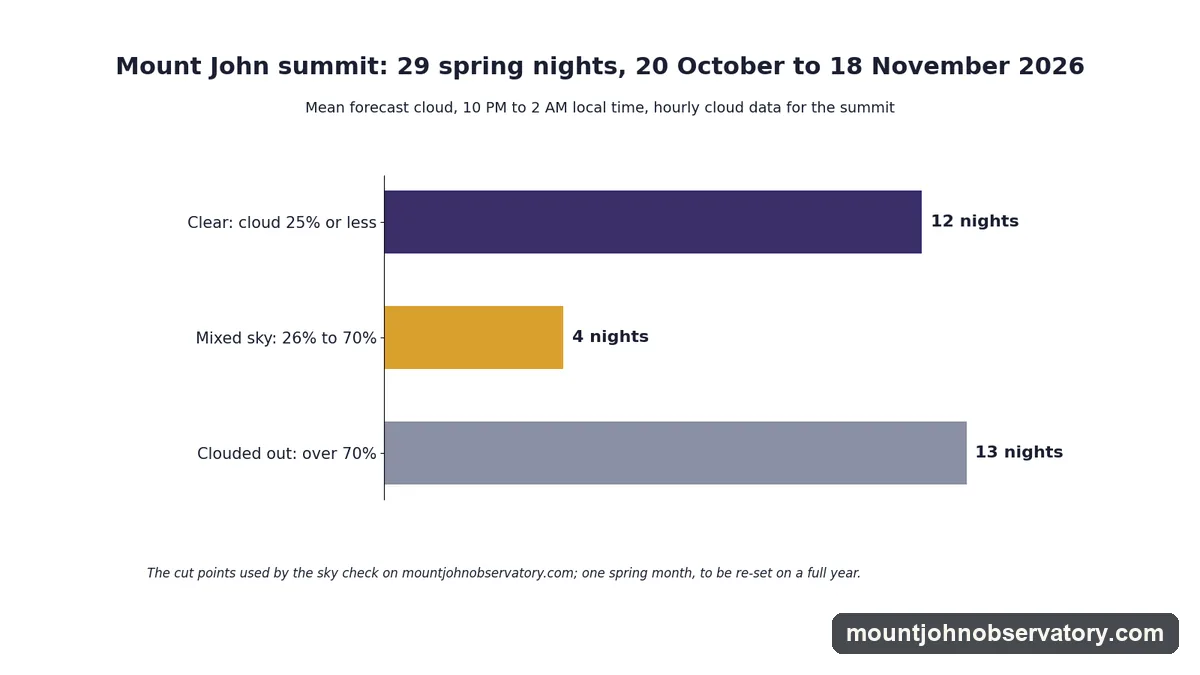
The strip at the top of this page reads MET Norway’s hourly forecast for the summit point, at 1,029 m, and averages the cloud forecast for 10 PM to 2 AM local time tonight. At or under 25% it says CLEAR, up to 70% MIXED SKY, and above that CLOUDED OUT. Those cut points were set on 29 spring nights, 20 October to 18 November 2026, of hourly cloud data for the summit: 12 of those nights came out at or under 25%, 4 in between and 13 above 70%, so a Mackenzie night tends to be either clear or not. One spring month is a small sample, and the cut points will be re-set on a full year.
The moon figure is the share of the moon’s disc lit tonight, worked out from the date and rounded to the nearest 5%. “Fully dark from” is the time the sun sinks 18 degrees below the horizon at the summit, the end of astronomical twilight, worked out for tonight; it is not a tour time. A forecast is a forecast: none of this predicts the view on the night.
When the sky is cloudy
The summit tour depends on the weather: on a bad night it may be called off, with an indoor session or a full refund in its place. Separately, every session on this page is free to cancel until 24 hours before the start. Some reviewers describe a night that moved indoors; for a day when the forecast already shows heavy cloud, the indoor Dark Sky Experience at the base does not need a clear sky at all.
Guest Reviews
Guests on the Mount John Summit
4.6/5
from 359 reviews
"Unfortunately, due to the weather, we weren’t able to stargaze from the observatory. However, the indoor tour that was recommended as an alternative was very interesting and enjoyable. I asked a lot of questions, but our guide answered every one of them patiently and thoroughly. I learned so much and gained a much deeper understanding of the night sky in the Southern Hemisphere. Even though we couldn’t see the stars from the observatory, we had a wonderful experience. Thank you so much!"
"Our tour guide Merlin was amazing, He was so engaging and fun!! The stars are in like anything you’ve ever seen up there!"
Read all 359 verified reviews
See All ReviewsStand Among the Domes After Dark
Dark Sky Project's guided evening at the University of Canterbury's observatory: check in at the base in Lake Tekapo village, the coach up Mount John, telescopes, a guide and a heavy jacket. For ages 10 and over. Starting from US$131 per person.
Check the summit calendarMount John Observatory Questions
Opening, the road, the summit session, the price, access, cloud and the view.
No. The University of Canterbury, which runs it, says the observatory is a research facility that is not open to the public, though it takes part in some university outreach events each year (canterbury.ac.nz, page dated 1 October 2026). Visitors reach the summit by the daytime road, and after dark on Dark Sky Project's summit session.
In the daytime, yes: the private access road is open 9am to 4pm every day, with a $14 per-vehicle fee paid at the gate, according to Dark Sky Project's pages (read 20 November 2026). In the evening, guests on Dark Sky Project's tours are “not permitted to drive up Mt John” (its FAQ, read 20 November 2026); they park at the base and a coach takes them to the summit.
1 hour 45 minutes (105 minutes), the coach both ways included. It leaves from Dark Sky Project's base on Motuariki Lane in the village, where jackets are issued at check-in; the coach ride takes about 15 minutes each way.
The summit session is US$131 per person on GetYourGuide, and two adults pay the same rate each. That covers the coach, the guide, the telescopes and the jacket; food, drinks and hotel pickup are extra. The crater session at Cowan's Observatory is US$76 per person and the indoor Dark Sky Experience US$32.
No: the summit session involves a 100-metre walk on a gravel incline and a couple of steps in the dark, and it is not wheelchair accessible. The crater session at Cowan's, the indoor Dark Sky Experience and Chameleon Stargazing's riverside session are wheelchair accessible.
The summit tour depends on the weather: on a bad night it may be called off, with an indoor session or a full refund in its place. Every session here is also free to cancel until 24 hours before the start, and the indoor Dark Sky Experience does not depend on the sky.
Yes, by day. The Department of Conservation's Tekapo Mt John Walkway is an 8.9 km loop of about 3 hours, graded an advanced tramping track, from next to Tekapo Springs. Or drive to the top, park near the cafe and walk the Mt John Summit Circuit Track in 30 to 45 minutes.
For views of Aoraki / Mount Cook, Mackenzie NZ points to the lookouts at Lake Pukaki, about 40 minutes' drive (62.9 km) from Tekapo.
Not on Dark Sky Project's summit, crater or indoor sessions: food and drinks are extra on all three. Chameleon Stargazing's riverside session includes hot chocolate and marshmallows by a fire bowl.
Ages 10 and over on the summit session and 5 and over on the crater session at Cowan's; the indoor Dark Sky Experience has no minimum age.
Still have questions? Email us at info@mountjohnobservatory.com